Fishing Games Explained: How Fish Shooting Games Work
How online fishing (fish shooting) games work for Malaysian players: cannon levels, multipliers, why they are not skill-based in the way they look, and how to budget.
Key takeaways
- Each shot costs money; the cannon level sets the cost per shot.
- Every target has a payout multiplier and a hidden capture probability set by the game.
- Aiming affects which targets you hit, but the game's built-in return still decides outcomes over time.
- Fast shooting and auto-fire can use up a balance very quickly.
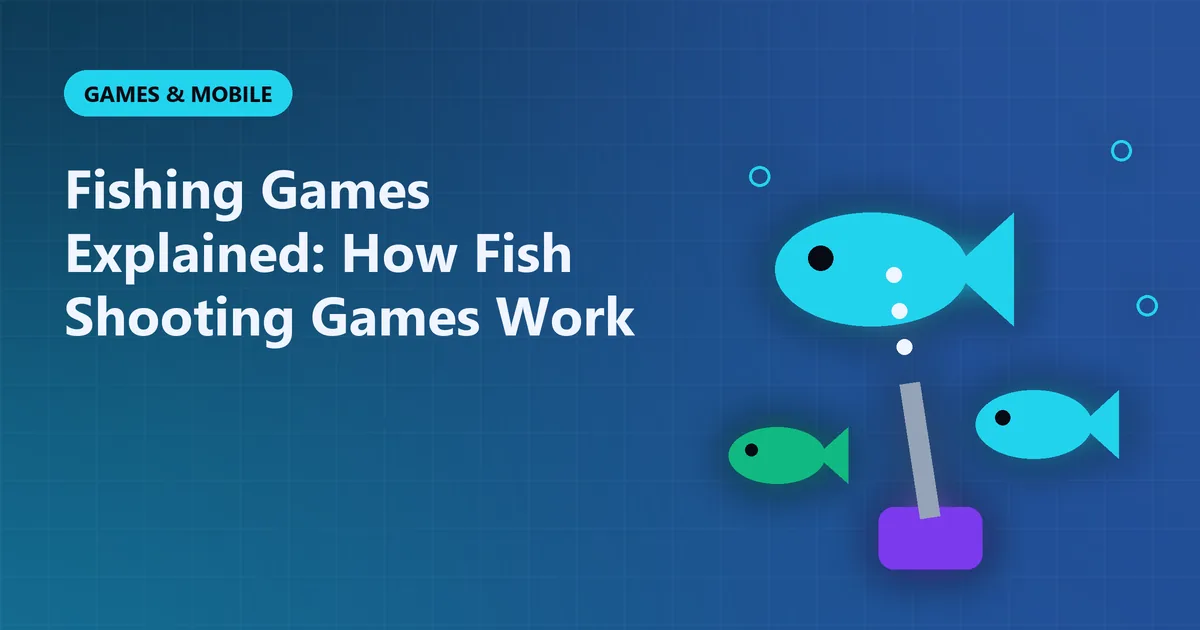
Fishing games, sometimes called fish shooting or fish hunter games, are some of the most recognisable titles on platforms serving Malaysian players. They look like arcade games: you aim a cannon at sea creatures swimming across the screen. Underneath, they are gambling games with a designed return, just like slots. This guide explains the mechanics. For other categories, see our JKB Asia games overview.
How a fishing game works
- Choose a cannon level. This sets the cost of each shot, for example RM0.10 or RM1.
- Fire at targets. Each creature has a multiplier (say 2× for small fish and 100× or more for bosses).
- Capture or miss. When a shot hits, the game decides whether the creature is captured. If it is, you win the multiplier times your shot cost.
- Repeat. Many games are multiplayer, so other players shoot at the same targets.
Is it skill or chance?
Fishing games look skill-based, and aiming does decide which targets you hit. But whether a hit becomes a capture is decided by probabilities in the game's software, and those probabilities are tuned so the game keeps a share of all shots over time. Larger targets pay more because they are harder to capture. Over a long session, results move towards the game's designed return, however well you aim.
Developers of some fishing games publish an RTP in the game rules, as slots do. If you can find it, it is the best guide to the long-run cost. If you can't, treat the game's return as unknown.
Why fishing games use up balances quickly
- Shot speed: you can fire many shots per second, so the total amount staked climbs much faster than in a slot.
- Auto-fire and lock-on: convenient, but they keep spending without decisions.
- Boss targets: chasing a high-multiplier boss can take dozens of shots with no guaranteed capture.
- Special weapons: laser or bomb features may cost more per use.
Practical budgeting
| Cost per shot | Shots per minute | Amount staked per 10 minutes |
|---|---|---|
| RM0.10 | 60 | RM60 |
| RM0.50 | 60 | RM300 |
| RM1.00 | 90 | RM900 |
The amount staked is not the amount lost, since captures return money. But it shows how quickly a session can escalate. Set a budget, turn off auto-fire, and stop when the budget is gone.
Which fishing game titles and providers are available under the JKB Asia name has not been verified by us. Information may vary and should be confirmed through the relevant official source.
Conclusion
Fishing games are fun and fast, but they are not a test of skill you can win over time. Know your cost per shot, watch how fast you are firing, and treat the session as paid entertainment.
Frequently asked questions
Can good aim make fishing games profitable?
Aim affects which targets you hit, but capture chances are set by the game so it keeps a share over time.
Are fishing games available on mobile?
Most are built for mobile screens and run in browsers or apps. See our app guide for safety points about downloads.
Gambling involves real financial risk and is never a reliable way to earn money. Only take part if you are an adult, it is legal where you live, and you are using money you can afford to lose. If gambling is causing stress, see our responsible gambling page for support options.