Why Chasing Losses Makes Things Worse: Gambling Psychology Explained
The psychology behind chasing losses: the gambler's fallacy, near misses, sunk cost and the illusion of control, and practical ways to stop a losing session.
Key takeaways
- Chasing losses means gambling more to win back money already lost; it usually deepens losses.
- The gambler's fallacy, near misses and sunk-cost thinking all push people to keep playing.
- Games are designed with features, such as celebrating small 'wins', that make losses feel smaller.
- Deciding stop rules in advance is the most effective defence.
“Just one more to win it back.” Almost everyone who has gambled has felt it. Chasing losses is the single behaviour most closely linked to gambling harm, and it is driven by thinking patterns that affect everyone, not just people with gambling problems. Understanding them makes them easier to resist. For practical limits, see how to set gambling limits.
What chasing losses looks like
- Raising stakes after a loss to recover faster
- Extending a session beyond the planned time or budget
- Depositing again the same day after losing a deposit
- Returning the next day specifically to “get it back”
The thinking traps behind it
The gambler's fallacy
Believing a win is “due” after a run of losses. Slots, roulette, dice and cards don't remember previous results; the next outcome has the same odds as always. Our RNG guide explains why.
Near misses
Two jackpot symbols and a third just above the line feel like “almost winning”. In reality, a near miss is simply a loss. Research suggests near misses can activate reward responses in the brain, encouraging continued play.
Losses disguised as wins
A slot that pays RM0.50 on a RM1 spin often celebrates with lights and sounds. You lost RM0.50, but it felt like a win.
Sunk cost
“I've already put RM500 in, I can't stop now.” Money already lost is gone whatever you do next. The only question is whether to risk more.
Illusion of control
Choosing when to spin, blowing on dice or following roadmaps can make chance games feel controllable. They are not.
Why the maths makes chasing worse
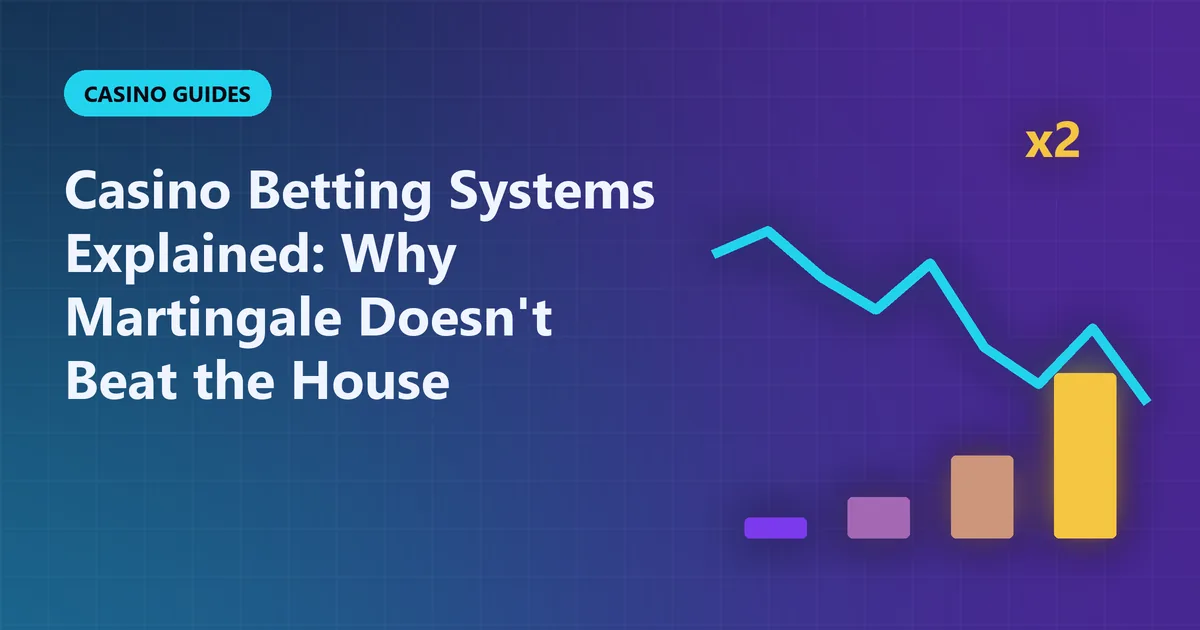
Every bet has the same negative expected value. Chasing increases the total amount you stake, so it increases your expected loss. Raising stakes adds volatility, which can produce a recovery, but more often accelerates the losses. Our betting systems guide shows how quickly doubling stakes escalates.
Practical ways to stop
- Set stop rules before you start. A money limit and a time limit, decided when calm.
- Accept losses as the cost of entertainment. Decide in advance that money gambled is spent, not lent.
- Pause after a loss. Step away for at least 10 minutes before any decision to continue.
- Remove quick deposit options. Delete saved payment details so topping up takes effort.
- Use tools. Deposit limits, reality checks and time-outs make chasing harder.
If you regularly chase losses, it is a recognised warning sign. See signs of problem gambling and our support page.
Ringkasan
Mengejar kerugian bermaksud terus berjudi untuk mendapatkan semula wang yang telah hilang. Ia biasanya menambah kerugian. Tetapkan had sebelum bermula dan berhenti apabila had dicapai.
Conclusion
Chasing losses feels logical in the moment because of how our minds handle risk and near misses. The maths says otherwise. Decide your limits in advance, treat losses as spent, and step away when the urge to “win it back” appears.
Frequently asked questions
Is chasing losses a sign of a gambling problem?
It is one of the most common warning signs, especially if it happens regularly or involves borrowing.
Why do near misses feel so close?
Games often display them prominently, and they can trigger a sense of almost winning. Statistically, they are ordinary losses.
Gambling involves real financial risk and is never a reliable way to earn money. Only take part if you are an adult, it is legal where you live, and you are using money you can afford to lose. If gambling is causing stress, see our responsible gambling page for support options.