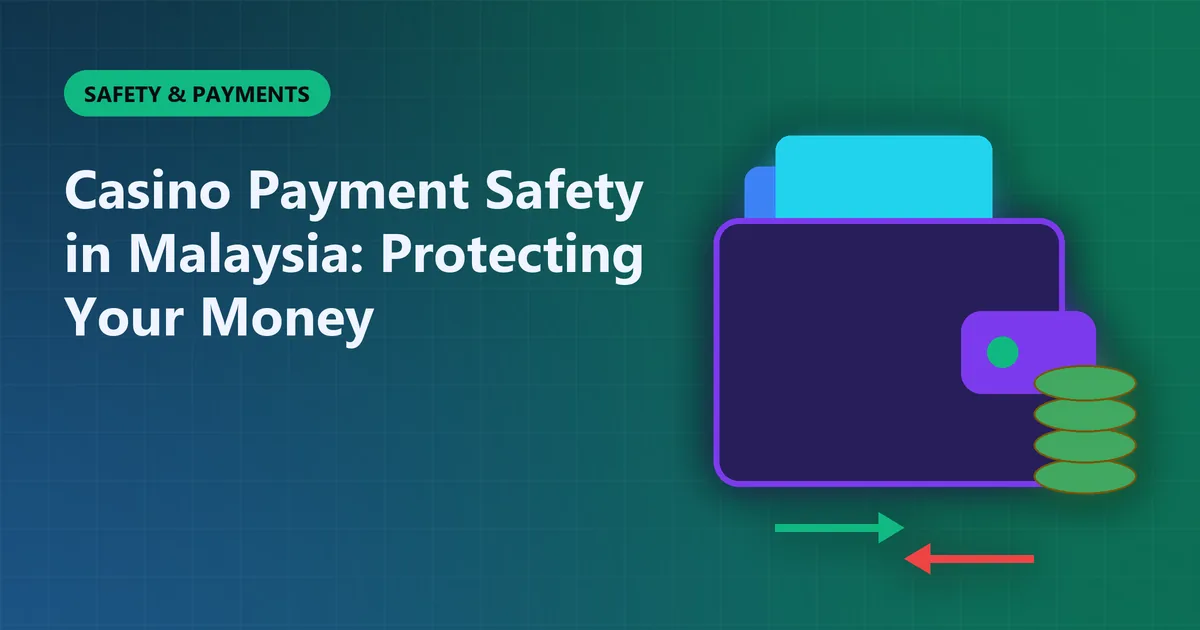
Casino Payment Safety in Malaysia: Protecting Your Money
How Malaysian players can protect their money when paying online casinos: mule account red flags, record keeping, bank restrictions and what to do if scammed.
Key takeaways
- Payments to personal bank accounts or through chat agents are the biggest single risk sign.
- Check unfamiliar bank accounts and phone numbers with the police's Semak Mule service before transferring.
- Keep screenshots and transaction references for every deposit and withdrawal.
- If you are scammed, call your bank and the National Scam Response Centre (997) immediately.
For Malaysian players, the most serious losses linked to online casinos often have nothing to do with the games. They come from payment scams: fake deposit accounts, “agents” who disappear with transfers, and demands for fees to release winnings. This guide focuses on protecting your money. For the mechanics of deposits and withdrawals, see our JKB Asia deposit guide and withdrawal guide.
Why payments are the riskiest part
Because online casinos are not licensed to serve Malaysian residents, there is usually no local regulator to complain to if a payment goes wrong, and many operators use informal payment routes. That creates space for fraud — both by fake platforms and by people impersonating real ones.
Red flags before you transfer anything
Personal bank accounts
If you are told to transfer money to an account in an individual's name, stop. These are frequently “mule” accounts — accounts rented or stolen to move money from scams. Money sent to them is very hard to recover.
Agents on WhatsApp or Telegram
Deposits arranged privately with a chat “agent” bypass whatever protections the platform may have. If something goes wrong, there may be no record linking the payment to your account.
Changing account details
A different receiving account every time is a strong sign that money is being routed through mule accounts.
Requests for banking credentials
No legitimate payment process needs your online banking password or TAC. Anyone asking for them intends to access your bank account.
Check before you pay: Semak Mule
The Royal Malaysia Police's Commercial Crime Investigation Department runs Semak Mule, where you can check whether a bank account number, phone number or company name has been reported in police reports for fraud. A clean result does not prove an account is safe, but a match is a clear reason not to pay.
Keep a record of every transaction
- Screenshot the deposit page showing the amount and destination.
- Save the bank or wallet transaction reference.
- Screenshot your casino balance after the deposit appears.
- For withdrawals, save the request confirmation and any support messages.
Records will not guarantee a refund, but without them you have very little to show your bank or the police.
Bank and e-wallet restrictions
Malaysian banks and e-wallet providers may block, flag or freeze transactions they believe are gambling-related, and their terms of service may prohibit such use. If an account is frozen, the issue is between you and the bank — the casino cannot resolve it. Understand this risk before using any payment method.
The “fee to withdraw” scam
A common pattern: your account shows a large balance, but when you try to withdraw, you are told to pay a “tax”, “verification fee” or “unlock deposit” first. After paying, another fee appears. Genuine operators deduct any legitimate fees from the withdrawal itself. Do not send more money to release money.
If you think you have been scammed
- Call your bank immediately. Ask them to try to stop or recall the transfer and to secure your account.
- Call the National Scam Response Centre on 997. Quick reporting gives the best chance of funds being traced and frozen.
- Make a police report. You can do this at a police station; keep your report number.
- Change passwords. Especially if you shared any login details or installed an app at someone's request.
- Stop contact with the scammer. Be cautious of anyone offering to “recover” your money for a fee — this is often a second scam.
If you find yourself depositing again to win back losses, that is a warning sign. Our responsible gambling page lists confidential support in Malaysia.
Conclusion
The safest payment is the one you do not make to an account you cannot verify. Use only payment routes on the platform's own pages, never personal accounts or chat agents, check unfamiliar accounts with Semak Mule, and keep records. If something goes wrong, act fast: bank first, then 997.
Frequently asked questions
What is a mule account?
A bank account used to receive and move money from crime, often rented from or stolen from a real person. Sending money to one can make it very hard to recover.
Can my bank reverse a gambling transfer?
Sometimes, if fraud is reported very quickly, but there is no guarantee. Contact your bank and the NSRC (997) immediately.
Sources and further reading
Gambling involves real financial risk and is never a reliable way to earn money. Only take part if you are an adult, it is legal where you live, and you are using money you can afford to lose. If gambling is causing stress, see our responsible gambling page for support options.